
How Entertainment
Resource unified
2,500+ live events.
One platform built for AI, replacing years of manual workflows with a three-sided ecosystem.
Built for how ER works today. Ready for what AI unlocks tomorrow.

String Quartet Booked
The Ritz-Carlton • Oct 12, 7PM
Integrated experiences unified under one platform
Native mobile apps shipped on iOS and Android
Performers managed in a single system of record
External tools needed for chat, contracts, and intake
The Context
A world-class agency running on spreadsheets

Entertainment Resource curates 2,500+ live performances a year for brands like Hard Rock, Ritz-Carlton, and The W Fort Lauderdale.
Behind the scenes, bookings, contracts, intake forms, performer messages, and client access were spread across disconnected tools.
The business had the demand and talent network to scale. It needed a platform layer with clean data, fewer manual handoffs, and a foundation ready for AI.
2,500+ performances
Coordinated every year
200+ performers
Managed across events
Manual handoffs
Across intake, contracts, and chats
Industry Pain Point
The same problem is holding back the talent booking industry

Requests
Buried in email threads
Availability
Known by one team member
Contracts
Tracked in another tool
The pressure ER felt is common across talent booking: high-touch relationships running on low-visibility systems.
Requests sit in email, availability lives in memory, contract status hides in another tool, and every client update requires searching across systems.
More events should create leverage. Without a structured operating platform, they create more coordination load.
Lucents rebuilt the workflow as a system of record, giving ER speed today and structured data for AI tomorrow.
How Lucents Forward-Deployed the Solution
We did not start with a feature list. We started inside the operation.
Observe operations
Sit inside the real booking flow
Map workflows
Turn handoffs into clear states
Design platform logic
Shape data, roles, and automations
Ship working product
Release useful platform increments
Collect feedback
Validate with ER's daily operators
Iterate
Tune the system until it fits the operation
Lucents worked inside ER's real operating rhythm, then converted workflow friction into product logic, data structure, and automation.
Outcome
A platform that matches daily operations
The Approach
One platform, three experiences, engineered to be AI-ready
Foundation sprint
We embedded with the ER team to map how events actually flow through the business. That discovery shaped a three-sided architecture: one system, three tailored experiences, with a single source of truth underneath.
Platform delivery
In Phase 1, we shipped the full ER Platform: an Agency Portal, a Client Portal, and a native performer app. Docusign integration, dynamic intake forms, and bulk gig offers replaced the manual workflows.
AI-ready by design
Every event, conversation, and contract now lives in one structured system. On top of this foundation, we are rolling out a Phase 2 AI roadmap: AI Audit, AI Task Allocation, and AI Performer Matching.
Platform Architecture & Tech Stack
Built as a scalable operating platform, not a one-off booking tool
ER's platform connects client, agency, performer, automation, and AI workflows on one structured technical foundation.
Core layer
Unified platform data layer
Events, clients, performers, contracts, conversations, tasks, and AI context.
Automations
AI workflows
Technical foundation
Hosting
Vercel
Fast deployment and global delivery
Application
NextJS
Web platform and API surface
Database
Neon Postgres
Relational system of record
Data Storage
Cloudflare R2
Object storage for platform files
Lucents operating layer
Forward Deploy Workflow
Observe, ship, validate, and iterate inside the operation
Unified Operating Schema
Shared data model for events, talent, clients, contracts, and AI context
AI Integration Blueprint
Roadmap from clean operations to audit, tasking, and matching use cases
Deliverables
What Lucents built for ER
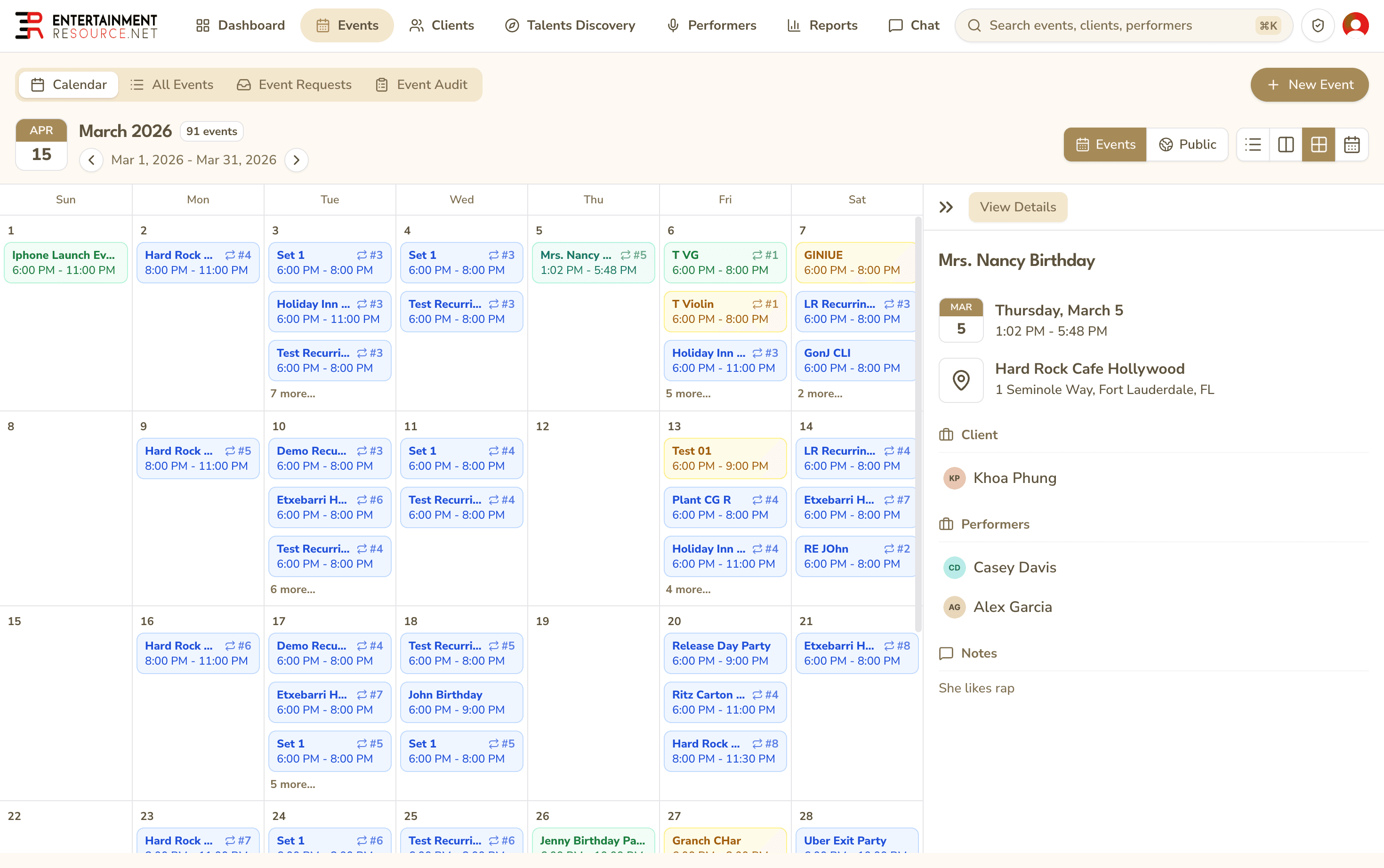
Agency Portal
ER's internal team now has a command center for bookings, client context, performer records, event status, tasks, feedback, and access control.
- Visual calendar & scheduling
- Role-based access control
- Event lifecycle management
Client Portal
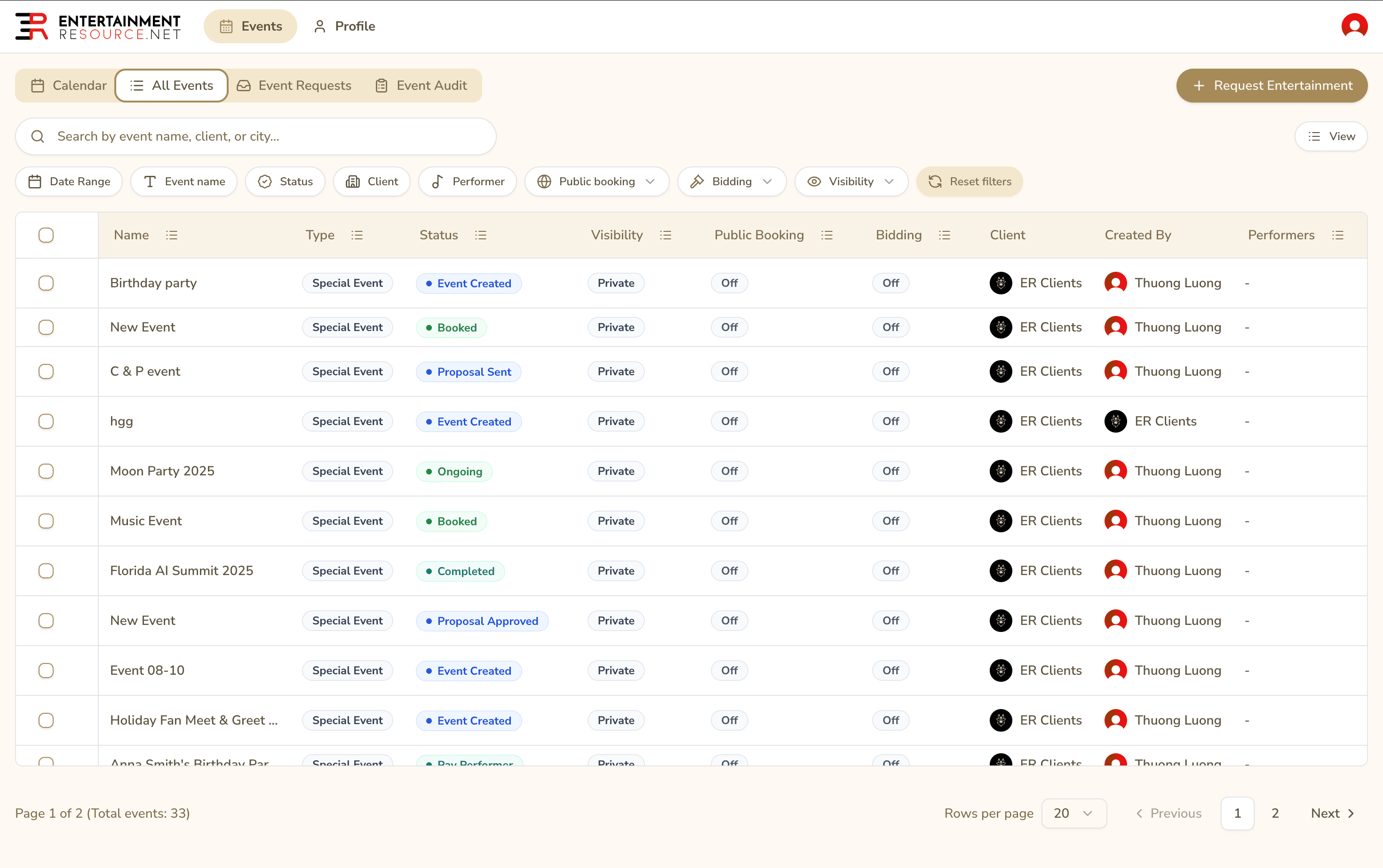
Venues and brands get a self-serve portal for booking requests, event details, history, communication, and feedback without long email threads.
- Self-serve booking requests
- Centralized communication
- Historical event tracking
Performer Mobile App
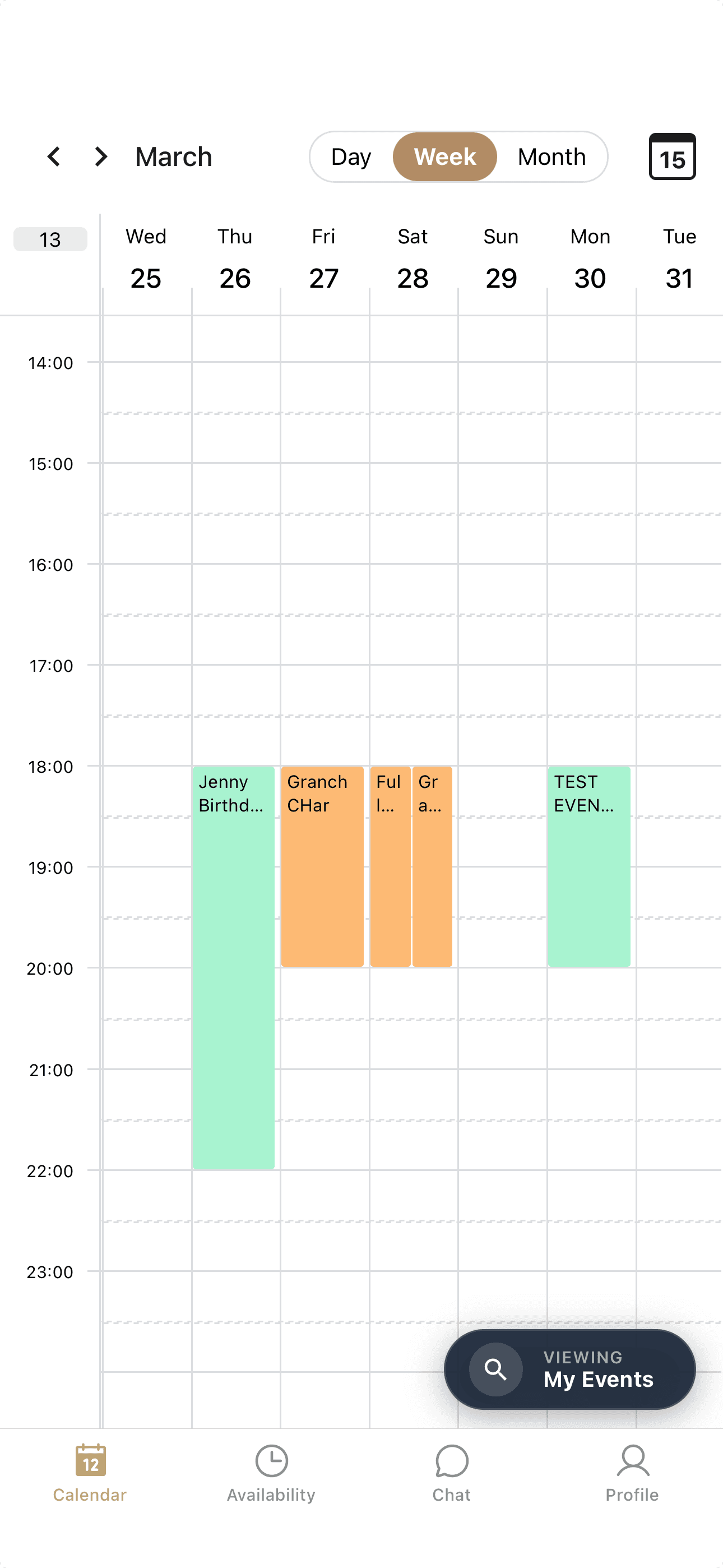
Native iOS and Android apps give performers a fast way to accept gigs, sync availability, receive updates, and manage event communication.
- One-tap gig acceptance
- Real-time push notifications
- Availability syncing
Built-in Automations
Contracts
Intake
Chat
Gig offers
One connected workflow
Every action stays linked to the right client, performer, and event.
Contracts, intake, event chats, and bulk gig offers now run inside the platform, keeping every action tied to the right client, performer, and event.
- Docusign e-sign flow
- Conditional intake forms
- Event-linked chat and bulk offers
AI-ready Architecture
Unified schema
Structured context for every AI feature
AI Audit
Task Allocation
Performer Matching
Events, performers, clients, contracts, conversations, tasks, and feedback now live in a structured system that can support AI audit, task allocation, and performer matching.
- Unified operational schema
- Structured context for AI
- Roadmap for audit, tasks, and matching
ER Transformation
From daily operational pressure to a platform built for growth
Before Lucents
ER had the talent network and demand, but the operating layer depended on manual coordination across disconnected tools.
Lucents forward deploys
Lucents mapped the real workflow, shipped platform increments, tested with operators, and converted daily friction into product logic.
After the platform
ER now has cleaner operations, structured data, integrated user experiences, and a technical foundation for AI-enabled scale.
Start with a foundation that can actually scale.
One conversation to see how Lucents can turn fragmented operations into scalable platforms with structured data, automation, and AI readiness.