
How Dat Gia
launched an AI
real estate ecosystem.
Lagoona AI is the first layer of an AI-native real estate operation, built with Dat Gia and Lucents Technology to turn buyer interest into qualified sales opportunities.

Lagoona AI Assistant
"How can I help you explore Lagoona?"
AI-powered foundation live for Project Lagoona
Languages supported natively, Vietnamese and English
Consultation coverage, every day, every hour
Product layers mapped, customer-facing Lagoona AI and internal Lagoona Sales Copilot
The Context
A premium project that needed a 24/7 sales engine.

Dat Gia was bringing Lagoona, a premium residential project, to market while buyers were already researching after hours, switching between Vietnamese and English, and comparing details before speaking with sales.
The business needed more than a static website. It needed a digital front door that could answer accurately, qualify intent, and hand warm leads to sales with context.
Project details
Location, masterplan, amenities
Buyer intent
Captured inside each chat
Sales visibility
Leads and summaries in one place
Lucents designed the first layer to solve that urgent sales gap while leaving room for a broader AI-native real estate operation.
Industry Pain Point
Real estate sales still depends on human speed. Buyers now move faster than any sales team can.

Timing
Questions arrive outside office hours
Knowledge
Answers live across decks and scripts
Handoffs
Buyer context gets lost between teams
Real estate buyers move faster than office-hour sales coverage. They compare projects at night, ask detailed questions early, and expect answers before they are ready for a call.
For sales teams, this creates scattered conversations, uneven follow-up, and lost context between marketing, sales, and management.
Lagoona AI turned that gap into an operating advantage: explain the project, qualify intent, route serious buyers, and learn from every conversation.
How Lucents Forward-Deployed The Solution
Lucents moved from business friction to a live AI platform.
Discover
Work inside the business
Map buyer questions, sales handoffs, and where project knowledge already lives.
Structure
Turn knowledge into a system
Organize sales materials, FAQs, policies, and objections into an AI-ready base.
Build
Ship assistant and dashboard
Launch the customer-facing assistant, lead capture, routing, and team dashboard.
Improve
Tune with real usage
Use live questions and team feedback to sharpen answers, flows, and roadmap.
Forward deployment meant Lucents absorbed ambiguity before it reached Dat Gia's team.
We studied the sales motion, structured the knowledge base, shaped the assistant behavior, and built the dashboard around real decisions. Each feedback cycle made the answers sharper and the handoff cleaner.
The result was not a chatbot bolted onto a website. It was the first layer of an AI operating system for real estate sales.
The Approach
Three phases, one foundation, an ecosystem in view.
Brand & knowledge foundation
Mapped the buyer journey, gathered project materials, and built a trusted knowledge base for accurate consultation.
AI assistant & dashboard
Shipped the bilingual assistant, lead capture, segmentation, escalation flow, conversation logs, summaries, and admin visibility.
Launch, tune, iterate
Pressure-tested with Dat Gia teams, monitored real buyer questions, closed knowledge gaps, and improved flows after launch.
Tech Stack
A modern stack for a fast, scalable AI platform.
Hosting
Vercel
Fast, reliable deployment for the web platform.
Programming
Next.js
React-based application layer for the customer and admin experience.
Database
Neon Postgres
Serverless Postgres for leads, conversations, and platform records.
Data Storage
Cloudflare R2
Object storage for uploaded files and knowledge assets.
What's Next
From one assistant to an AI-native real estate ecosystem
Lagoona AI started as the customer-facing layer. The same foundation can now expand into internal sales enablement and a larger real estate operating system.
Lagoona AI
Dat Gia needed a premium digital front door that could answer buyer questions at any hour, support Vietnamese and English, collect lead information, and hand qualified prospects to sales with context.
Lucents built the website assistant and admin dashboard that turn website traffic into structured sales opportunities.

Lagoona Sales Copilot
The next layer gives sales teams instant access to the same trusted project knowledge, buyer context, and objection handling logic that powers Lagoona AI.
Reps can prepare faster, understand buyer intent, and respond with consistent messaging.
Dat Gia Transformation
Lucents took the operational headache and turned it into a growth platform.
Before Lucents
Buyer questions arrived at all hours. Knowledge lived across decks, scripts, and individual team memory.
Lucents forward deploys
Lucents mapped the pain, structured the knowledge, chose the technical direction, shipped the assistant, and delivered the dashboard.
After Lucents
Dat Gia now has an AI foundation that answers buyers, qualifies intent, and gives teams visibility in one place.
Before Lagoona AI, Dat Gia had strong demand but too much manual work around it.
Lucents turned operational friction into a product Dat Gia can grow with. Lagoona AI is not a one-off assistant. It is the first layer of a larger AI-native real estate system.
The Outcome
A digital front door that sells, and a roadmap the business can build on.
Phase one success
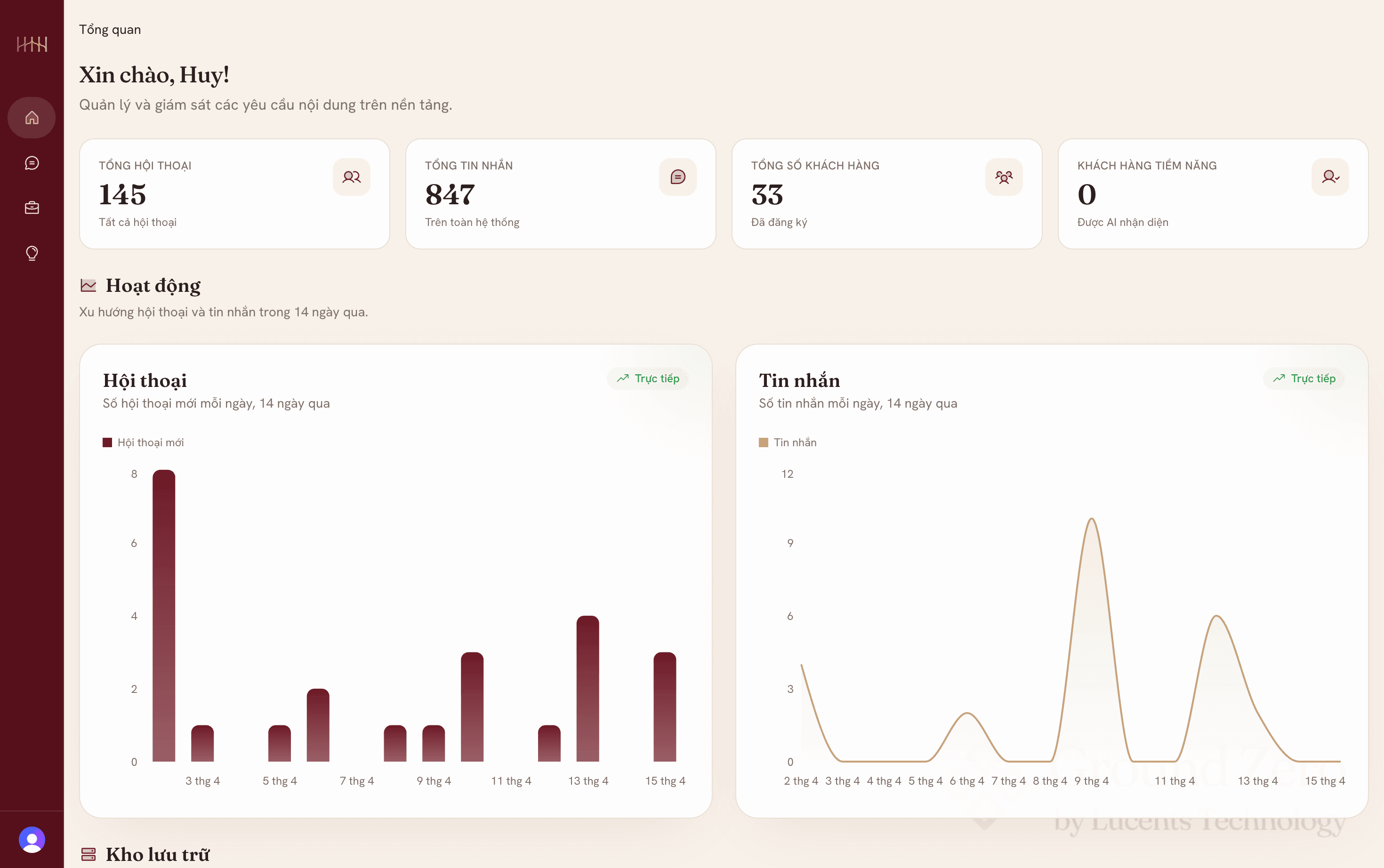
Dat Gia got a premium, bilingual, always-on AI assistant that qualifies buyers, hands them to sales with context, and gives leadership a live view into what the market is asking.
No more leads lost to timezone, language, or delayed follow-up.
The bigger picture
Dat Gia now has something most developers are still trying to define: a working AI foundation for real estate sales.
The platform captures demand, organizes customer intent, supports internal visibility, and creates the base for future sales enablement. Lucents did not only build the first version. We helped Dat Gia define the direction, ship the product, and create a path toward an AI-native operation.
Interested in building your own AI foundation?
Lucents Technology partners with small and medium businesses to design, build, and scale generative AI solutions that fit how their business actually works.