
How Dinosaur Vietnam is building an AI operating layer for creative production.
A forward-deployed system for always-on social campaigns, built around brand memory, workflow orchestration, and human review.
Creative Agent, powered by Lucents Agent Harness.

Creative Agent
Agent Harness, Brand Knowledge, and workflow orchestration
1 structured Brand Knowledge layer for brand and campaign memory
4 production workflows inside one agent interface
2 knowledge creation paths: manual entry and AI-assisted extraction
3 core layers: Brand Knowledge, Agent Harness, and workflow orchestration
0 generation allowed until required campaign knowledge is confirmed
The Context
A veteran creative agency under monthly production pressure

Monthly production rhythm
Dinosaur Vietnam runs monthly always-on social campaigns where brand taste, local nuance, art direction, and client approval all matter.
Campaign memory scattered
Every campaign carries its own pillars, angles, tone, do-not rules, examples, visual references, and feedback history. Much of that knowledge lived across files, decks, folders, and senior team memory.
System before generator
Dinosaur did not need another generic AI generator. They needed a system that could remember the brand, follow the campaign workflow, and improve through human review.
Industry Pain Point
AI is moving fast, but agency workflows are still fragmented

Creative judgment is hidden context
Creative agencies sell judgment and brand fluency, not generic content. A single social post can carry product strategy, audience nuance, channel rules, visual standards, and client history.
Prompting becomes extra work
When that knowledge is scattered, AI cannot reason with it. The team spends time prompting, correcting, reprompting, and checking quality instead of moving faster.
Agency intelligence needs structure
The real pain is not lack of AI access. It is that agency intelligence is not structured into a system AI can reliably use.
How Lucents Forward-Deployed the Solution
We did not start with an agent demo. We started inside the production workflow.
Observe monthly production
Study how campaigns move from input to client-ready work
Map creative handoffs
Connect pillars, angles, copy, sketches, feedback, and final posts
Narrow the AI OS scope
Focus the MVP on always-on social production
Structure brand knowledge
Turn campaign memory into confirmed system context
Build Agent Harness workflows
Assemble context and route commands through repeatable flows
Validate with creative review
Keep human approval, rejection, and refinement in the loop
Lucents turned Dinosaur's creative process into structured knowledge, repeatable workflows, and review loops that the team can actually use.
Outcome
A creative production system, not a prompt box
The Approach
From AI tool to creative production system
Phase 01: Ground-zero discovery
Lucents mapped how monthly campaign work moves from concept to pillars, angles, copy, sketch, and final post.
The key constraint became clear: AI output only helps if it is on-brief, on-brand, and usable in client review.
Phase 02: Brand memory and workflow design
Lucents designed the system around Brand Knowledge, not prompt boxes.
Brand and campaign context became typed knowledge that must be confirmed before generation.
Phase 03: Agent MVP and workflow orchestration
The Agent Interface lets users trigger workflows such as /workflow/content-angles, /workflow/content-writing, /workflow/sketch, and /workflow/social-post.
Agent Harness assembles the right context, routes the workflow, and keeps review feedback attached to the session.
Platform Architecture & Tech Stack
Agent Harness turns creative knowledge into repeatable production workflows
Creative Agent connects brand memory, workflow commands, human review, and production outputs on one structured platform foundation.
Lucents IP
Agent Harness
Routes intent, verified context, workflow execution, and human review through one agent layer.
n8n workflows
Creative outputs
Technical foundation
Hosting
Vercel
Fast deployment and global delivery
Application
NextJS
Web platform and API surface
Database
Neon Postgres
Relational system of record
Data Storage
Cloudflare R2
Object storage for platform files
Lucents operating / agent layer
Agent Harness
Lucents IP for routing creative intent, context, workflows, and review
Brand Knowledge Layer
Structured brand and campaign memory with confirmation gates
Self-hosted n8n Workflow Orchestration
Controlled workflow execution for content angles, writing, sketches, and posts
Human Review & Feedback Loop
Approval, rejection, regeneration, and refinement as reusable feedback
Deliverables
What Lucents built for Creative Agent
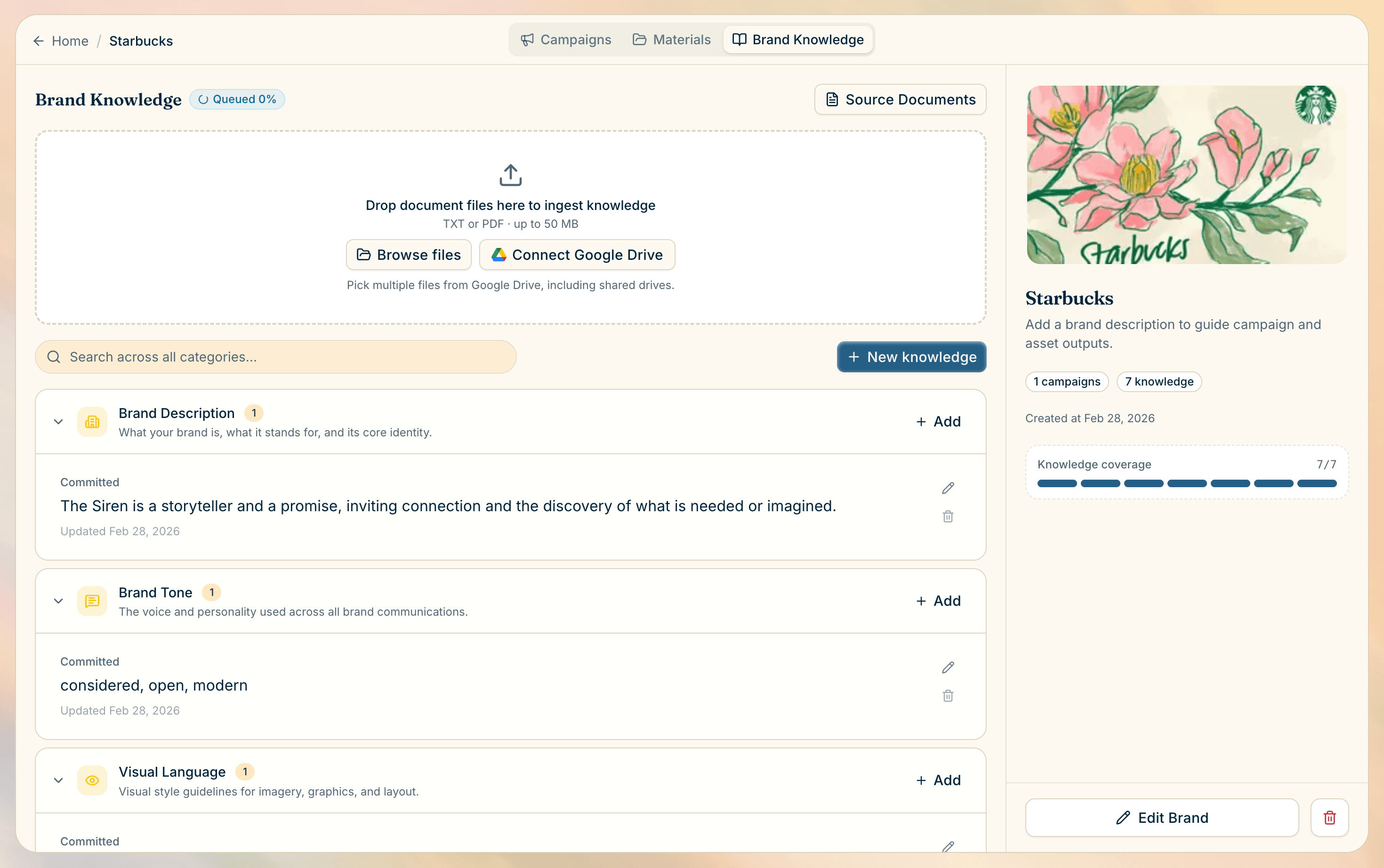
Brand Knowledge Function
Brand Knowledge gives Creative Agent a confirmed memory layer before generation begins.
- Brand and campaign objects
- Manual and AI-assisted knowledge creation
- Readiness gate before generation
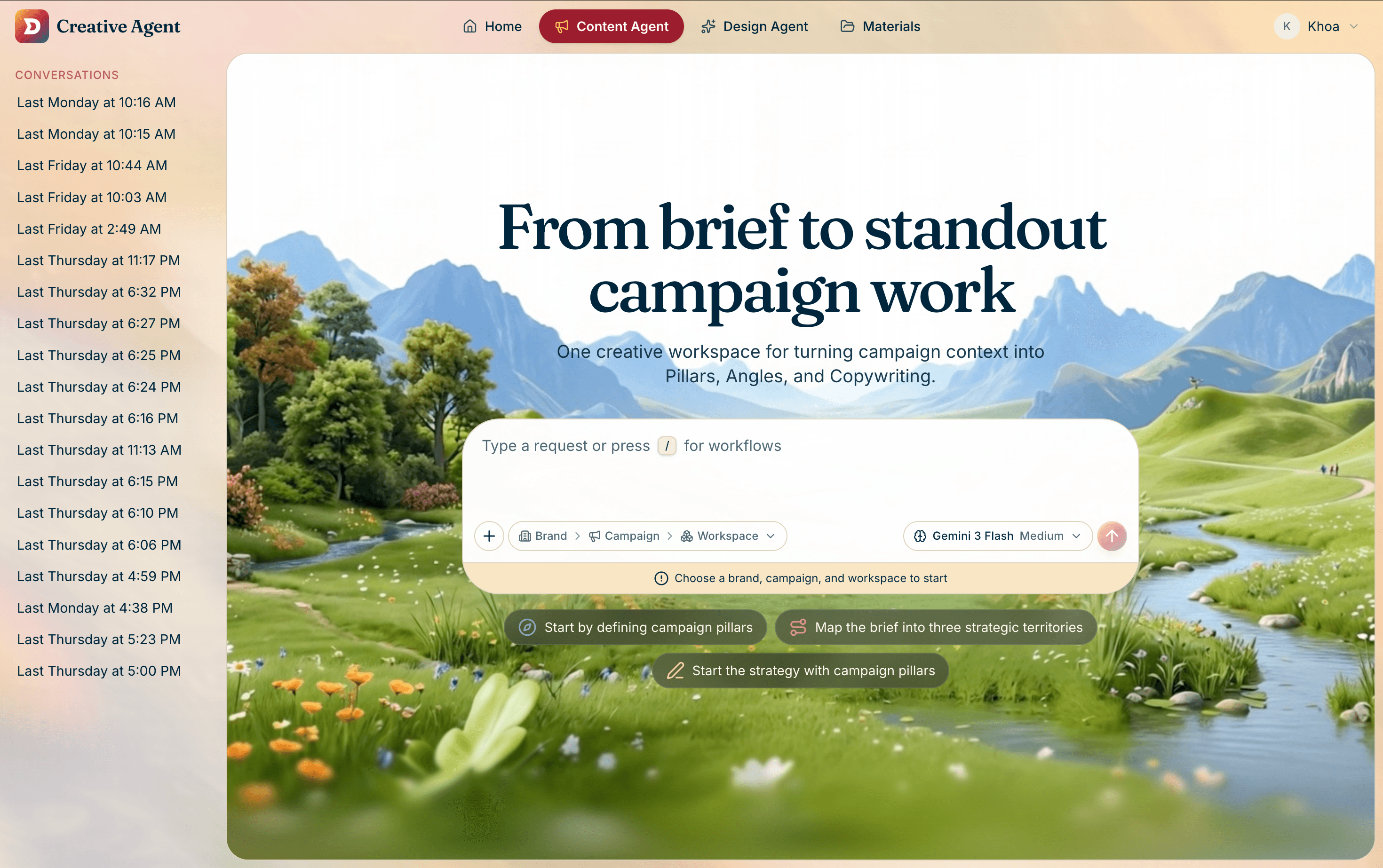
Agent Interface
The Agent Interface gives the creative team one place to describe intent, trigger workflows, review outputs, and request refinements.
- Chat-based workflow control
- Context assembly behind the scenes
- Approval, rejection, and regeneration
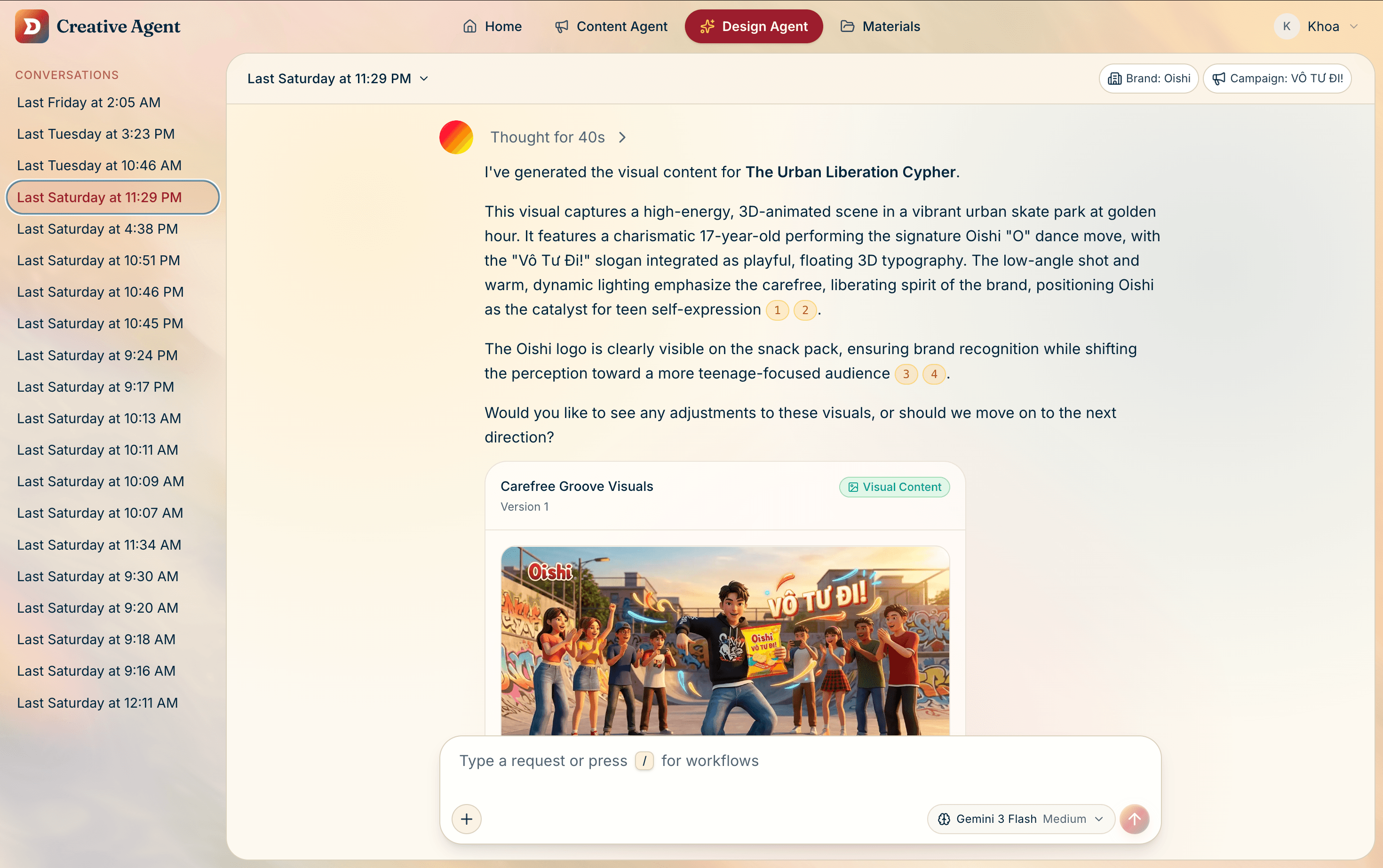
Content Writing Workflow
The content workflow generates campaign-aware writing options from selected angles and confirmed brand context.
- Three versions per selected angle
- Facebook and Instagram channel tagging
- Brand tone, do-not rules, and feedback memory
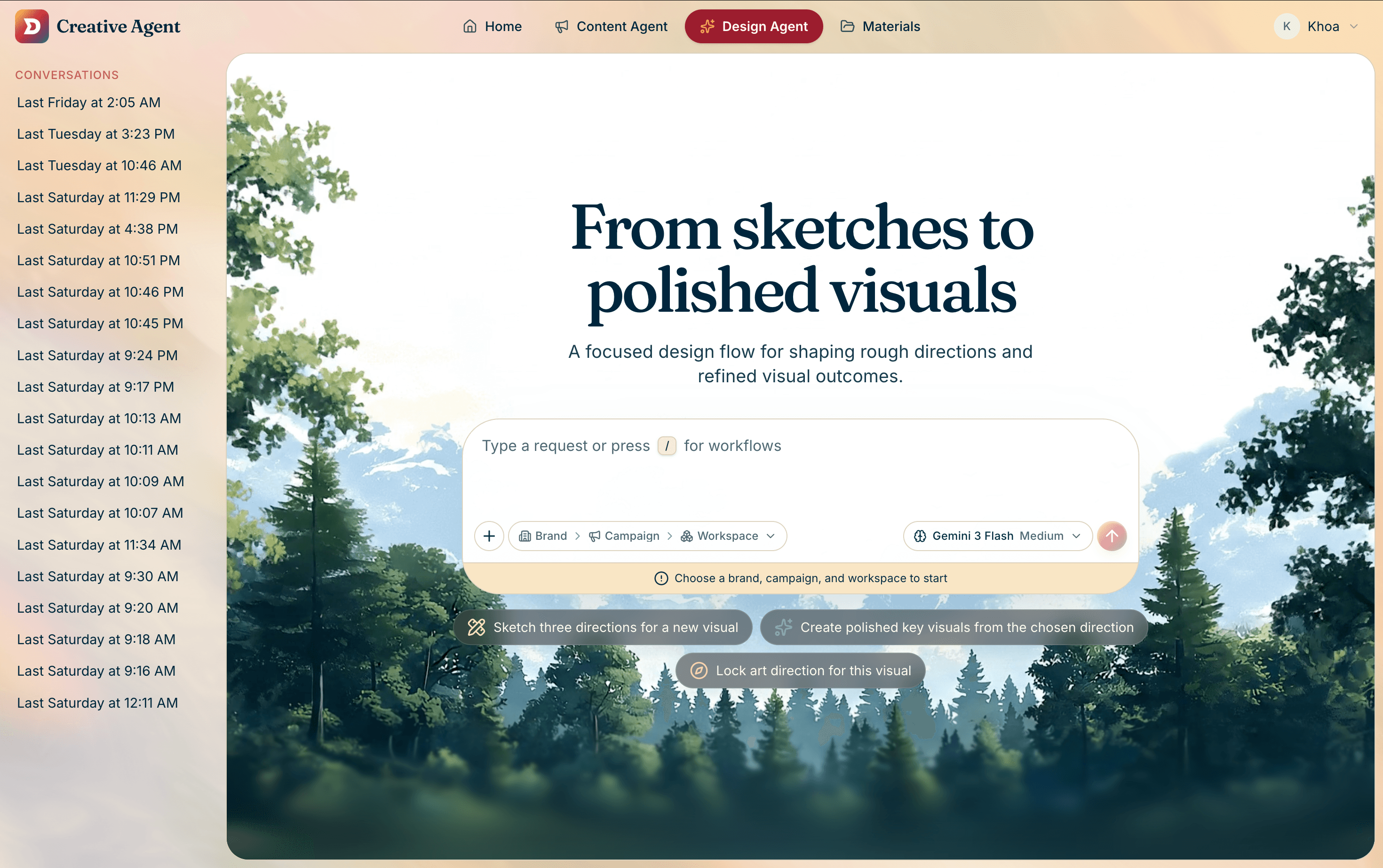
Social Post Workflow
The social post workflow turns approved copy and sketch direction into final static post options that follow campaign art direction.
- Approved copy and sketch as inputs
- Feed and Story format support
- Regenerate, resize, and refine in one interface
Creative Agent Transformation
From repeated AI setup to a reusable creative production layer
Before Creative Agent
Dinosaur's team had to rebuild campaign context again and again. Brand knowledge lived across files, decks, references, and memory. AI tools produced outputs, but the team still had to train, correct, and manage them manually.
Lucents forward deploys
Lucents worked inside the creative process, mapped the real monthly workflow, narrowed the project from a broad AI OS to the highest-pressure social production flow, and turned Dinosaur's production steps into structured product logic.
With Creative Agent
Dinosaur gets a reusable system for always-on social production. Brand and campaign knowledge becomes structured. Workflows become repeatable. Human review becomes data. The team can move from campaign input to angles, copy, sketch, and final post inside one agent interface.
Build AI around the work, not around a prompt box.
Lucents helps agencies and businesses turn messy operational knowledge into software systems that teams can use every day.
Book a discovery call.